What Belongs in Church Minutes (And What Should Never Be Written)

The Golden Rule of Church Minutes
If you are currently recording every word spoken during your board meetings, you are likely creating a legal liability rather than a historical record. The most important rule for church secretaries and pastors to remember is this: Minutes should record what was done, not what was said. By focusing exclusively on motions, votes, and official actions, you protect your church from unnecessary scrutiny while maintaining a clear, audit-proof history of your leadership decisions.
When you document the back-and-forth of a debate, you inadvertently create a record of dissent, personal opinions, and potentially inflammatory remarks that can be taken out of context during a legal dispute or an IRS audit. Your minutes are a legal document, not a transcript. If your board needs a verbatim record of a sensitive discussion, hire a court reporter; otherwise, keep your minutes lean, objective, and focused on the final outcome of every agenda item.
What Must Be Included in Every Meeting Record
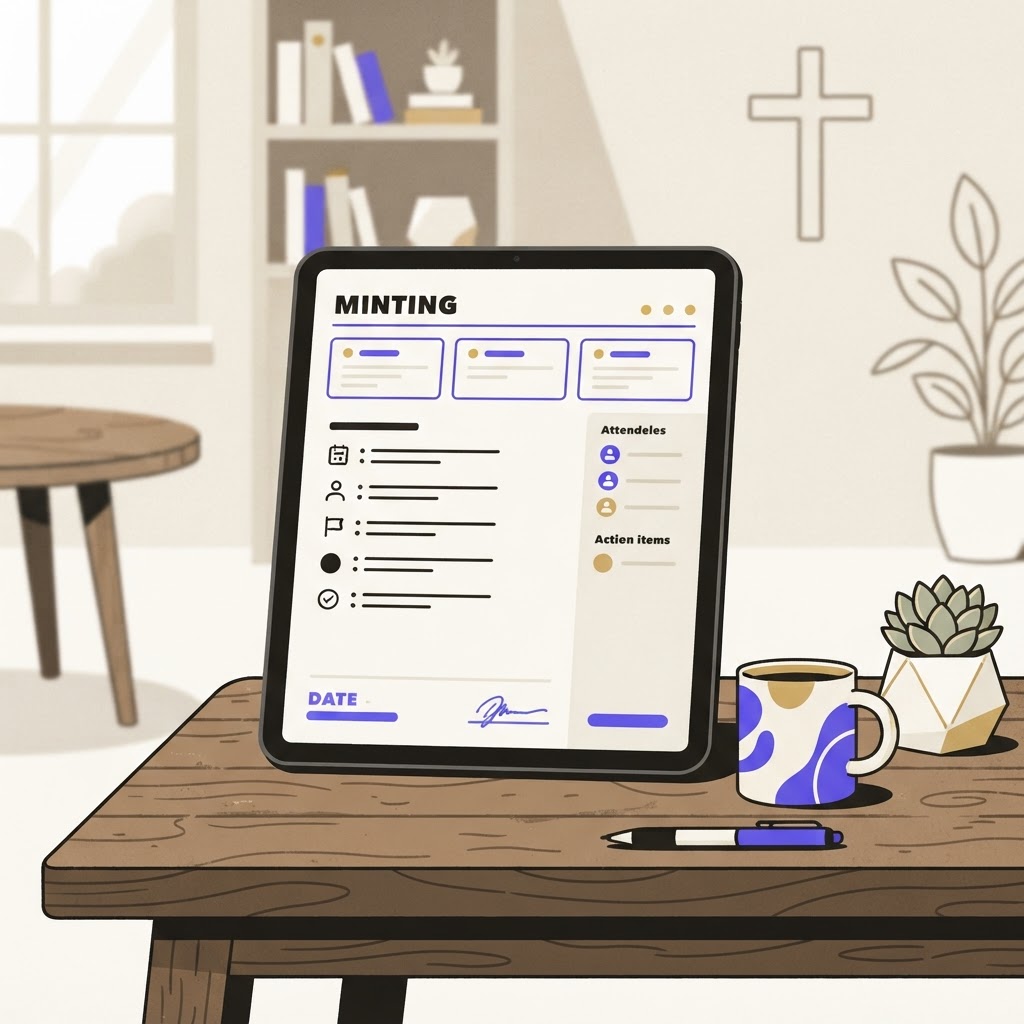
To ensure your minutes serve their purpose as a reliable institutional memory, every set of minutes should contain a consistent set of core details. Think of this as the "who, what, where, and when" of your governance. Without these elements, your minutes may be considered incomplete or invalid in a legal setting.
- Meeting Logistics: The type of meeting (regular, special, or annual), the name of the board or committee, the date, the time, and the physical or digital location.
- Attendance: A clear list of who was present, who was absent, and any invited guests. Always confirm and record that a quorum was present to conduct business.
- The Agenda Flow: Follow the order of your pre-distributed agenda. Each item should have its own paragraph or section.
- Official Actions: Every motion made, who made it, who seconded it, and the final result of the vote (including the count if required by your bylaws).
- Next Steps: A summary of assigned action items, including the person responsible and any agreed-upon deadlines.
At ReadyPen, we see many churches struggle to balance these requirements with the speed of modern ministry. Our tool is designed to help you capture these essential elements automatically, ensuring your records are consistent and compliant without requiring hours of manual typing.

Recommended Detail Level in Minutes
What Should Never Be Written Down
The temptation to "capture the spirit of the meeting" is strong, but it is a trap. Avoid documenting the following at all costs:
- Personal Opinions: Never attribute specific comments to individuals unless a formal vote is being recorded.
- Heated Exchanges: If a disagreement occurs, record the motion and the vote, not the emotional intensity or the specific arguments used by board members.
- Speculative Future Plans: Only record decisions that have been finalized. If a project is merely being "brainstormed," it does not belong in the official minutes.
- Sensitive Personnel Details: While you must record the decision to hire or terminate, do not include the specific performance grievances or private health information discussed in the room.
Pro Tip: If a board member insists that their specific argument be recorded, remind them that minutes are a public-facing legal record. Suggest that they submit a separate, private memo to the board chair if they feel their perspective must be preserved for the record.
Comparison of Meeting Documentation Tools
Choosing the right tool depends on your church's size and technical comfort. Please note that ReadyPen is our own product, built specifically for the unique needs of ministry teams.
| Tool | Best For | Pros |
|---|---|---|
| ReadyPen | Church Boards | Built for ministry context; automates action items. |
| Otter.ai | General Meetings | Excellent transcription, but lacks church-specific structure. |
| Manual Notes | Small Committees | Free; total control, but prone to human error. |
Key Takeaways
| Point | Details |
|---|---|
| Focus | Record actions and votes, not the conversation. |
| Safety | Avoid documenting personal opinions or sensitive grievances. |
| Structure | Use a consistent template for every meeting. |
| Legal | Minutes are legal documents; keep them objective. |
Conclusion
Your church minutes are the silent guardians of your ministry's history and legal standing. By stripping away the unnecessary chatter and focusing on the clear, actionable decisions of your leadership, you create a document that serves the church for generations to come. If you are ready to simplify your documentation process and ensure your board stays focused on the mission, you can try ReadyPen free to automate your meeting notes and minutes today.