Small Group Leader Training Documentation Guide

Small Group Leader Training Documentation Guide
Small group leader training documentation is a structured collection of guides, tools, and processes designed to equip leaders to build vibrant, supportive communities within the church. Without it, even motivated volunteers struggle to facilitate meaningful spiritual growth. The most effective training programs combine written manuals, facilitation skill modules, and ongoing coaching systems into one cohesive resource. This guide gives church leaders and volunteers a clear, practical path to build training documentation that actually works in 2026.
What are the essential components of small group leader training documentation?
Strong training documentation starts with clear learning objectives tied directly to spiritual and community goals. A leader who knows exactly what success looks like will facilitate with far more confidence than one handed a generic binder. Every training manual for group leaders should define outcomes in plain language: what the leader will be able to do, how the group will function, and what spiritual growth looks like over time.
Facilitation skills form the backbone of any group leader development guide. Active listening, open-ended questioning, and managing group dynamics are not soft skills. They are teachable techniques that belong in writing, with practice exercises attached. A leader who has read about active listening and then practiced it in a role-play scenario retains it far better than one who only read a bullet point.

Structured schedules matter just as much as content. Effective small group leader training requires 6–8 hours of initial instruction focused on facilitation skills, plus monthly coaching sessions. Even a focused two-hour workshop produces a measurable lift in leader confidence. That finding means your documentation should map out exactly when training happens, not just what it covers.
The following components belong in every training document:
- Learning objectives tied to spiritual formation and community health
- Facilitation technique modules covering listening, questioning, and conflict resolution
- Structured training schedules with initial hours and monthly check-in plans
- Group health tracking tools for attendance, engagement, and leader check-ins
- Templates and sample agendas leaders can adapt for their specific group
| Component | Purpose |
|---|---|
| Learning objectives | Align leader behavior with group spiritual goals |
| Facilitation skill modules | Build practical, repeatable leadership habits |
| Training schedule | Create accountability and pacing for development |
| Health tracking tools | Catch burnout and disengagement early |
| Meeting templates | Reduce prep time and increase consistency |
Pro Tip: Include a one-page “quick reference” card inside your training manual. Leaders under pressure default to what they can see in 30 seconds, not what they remember from a three-hour session.
How to design training documentation that balances content and practice
Practice-driven training consistently outperforms content-heavy approaches. A leader who spends 80% of training time reading and 20% practicing will underperform a leader who flips that ratio. Your documentation design should reflect this by building in exercises, role plays, and peer discussion after every major concept.
Group coaching is as effective as individual coaching in organizational settings. Cohorts of 6–12 participants balance diversity of perspective with enough individual airtime for each leader to grow. That size range is the right target for any church-based cohort training program. Smaller groups lose the richness of varied experience; larger ones silence quieter voices.
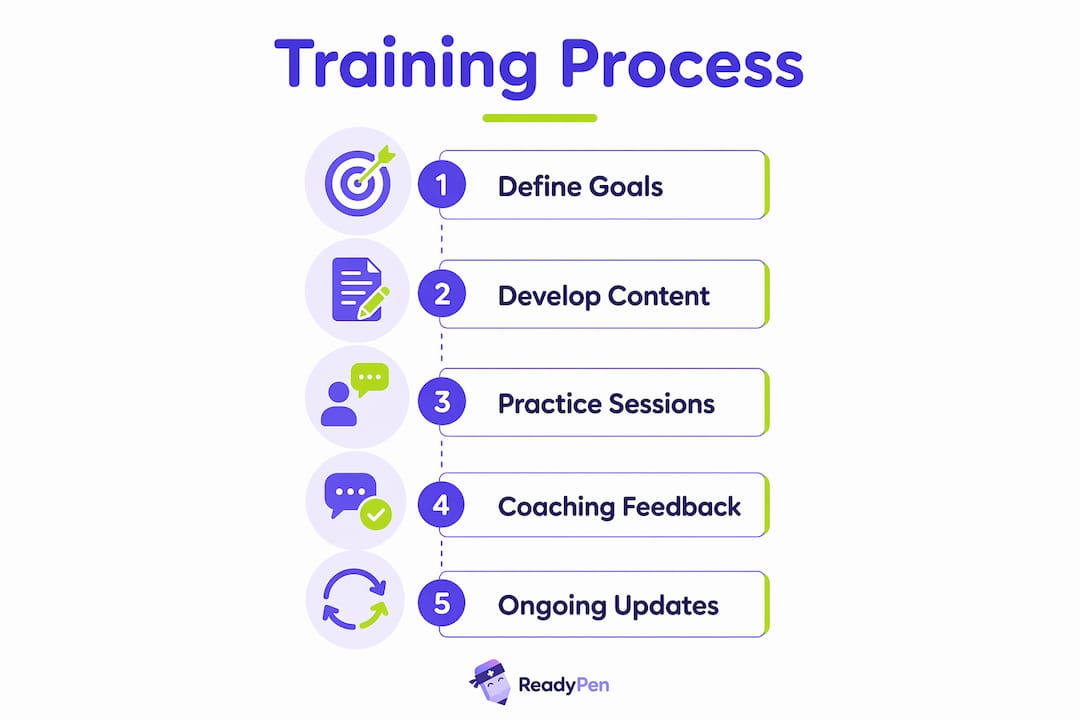
A six-month program using monthly modules with measured outcomes is a proven structure for team leader development. Each module should include a learning input, a behavioral commitment, a peer session, and a measurement checkpoint. This structure turns your documentation from a static manual into a living development plan.
Build your documentation in this sequence:
- Define the outcome first. Write what a fully equipped leader looks like before writing a single training page.
- Map monthly modules. Assign one core skill or concept per month across a six-month cycle.
- Embed peer sessions. Schedule cohort meetings where leaders practice and debrief together.
- Pair new leaders with experienced ones. Mentorship pairing is a low-cost method that strengthens leader confidence and long-term group health.
- Add measurement checkpoints. Define what progress looks like at month two, four, and six.
Preparation of heart matters more than a detailed script. Documentation that helps a leader show up spiritually open and relationally present will produce better group outcomes than documentation that tells them exactly what to say at every moment.
Pro Tip: Add a “heart preparation” section to each module. Ask leaders to reflect on one personal question before each session. This shifts the focus from performance to presence, which is where real facilitation happens.
What tools and methods can optimize the documentation process?
Shared document workspaces give church teams a single location for all training materials, updates, and leader notes. When documentation lives in one accessible place, leaders stop using outdated versions and coordinators stop answering the same questions repeatedly. The practical result is less confusion and more consistent facilitation across every small group.
Meeting minute templates and automated summaries are underused in ministry settings. Tracking group health metrics like attendance, engagement, and leader check-ins prevents burnout and group dissolution. Simple systems help leaders identify problems early, before a struggling group quietly disappears. Documenting these metrics after every coaching session creates a record that informs future training updates.
The three main documentation approaches each carry trade-offs:
| Approach | Strengths | Limitations |
|---|---|---|
| Manual documentation | Full control, low cost | Time-intensive, prone to gaps |
| Automated documentation | Fast, consistent, searchable | Requires setup and adoption |
| Hybrid documentation | Balances depth and efficiency | Needs clear role assignments |
Most church teams benefit most from a hybrid approach. Automated tools handle meeting summaries and attendance logs, while leaders add qualitative notes about group dynamics and spiritual observations. This division of labor keeps documentation thorough without burning out the people responsible for it.
- Use a shared workspace for all training versions and updates
- Automate attendance and summary capture after every coaching session
- Schedule quarterly documentation reviews to incorporate leader feedback
- Assign one person to own the documentation update cycle
Pro Tip: After each monthly coaching session, send leaders a two-question feedback form: “What was most useful?” and “What was missing?” Their answers are your best source of documentation improvements.
What are common challenges in small group leader training documentation?
Over-scripting is the most common and most damaging mistake in leader training materials. Churches that over-script leader sessions limit authentic group interaction and reduce the facilitator’s ability to guide spiritual discovery. A script gives leaders a false sense of security. It does not prepare them for the moment a group member shares something unexpected and the room goes quiet.
One-time training events without follow-up are the second major failure point. A single Saturday workshop, no matter how well designed, does not produce lasting behavior change. Structured leadership development requires assessment, goal setting, mentorship, and ongoing review. Missing any one of those elements weakens the outcome. Your documentation must build in the follow-up, not assume it will happen organically.
Common mistakes and their corrections:
- Over-scripting sessions. Replace word-for-word scripts with discussion frameworks and open-ended question banks.
- One-time training only. Build monthly coaching sessions directly into the documentation calendar.
- No health tracking. Add a simple one-page group health log to every leader’s toolkit.
- Ignoring leader burnout. Include a burnout self-assessment in quarterly check-in documentation.
- Static documentation. Schedule a formal review every six months to update materials based on real leader feedback.
Flexibility is not the opposite of structure. The best training documentation gives leaders a clear framework and then trusts them to adapt it. That trust, written into the documentation itself, is what separates a manual that collects dust from one that leaders actually use.
Pro Tip: Add a “when things go sideways” section to your training manual. Give leaders two or three specific scenarios, like a dominating talker or a group member in crisis, and walk through how to respond. Real-world preparation builds real-world confidence.
Key takeaways
Effective small group leader training documentation combines clear learning objectives, practice-driven modules, mentorship pairing, health tracking tools, and regular documentation reviews to produce confident, sustainable leaders.
| Point | Details |
|---|---|
| Start with outcomes | Define what a fully equipped leader looks like before writing any training content. |
| Build in practice | Allocate more training time to exercises and peer sessions than to reading or lectures. |
| Use cohort coaching | Groups of 6–12 leaders create shared learning and reduce the cost of individual coaching. |
| Track group health | Document attendance, engagement, and check-ins to catch burnout before it causes group loss. |
| Review documentation regularly | Update training materials every six months using direct leader feedback. |
What I’ve learned from building leader training documentation that actually sticks
The single biggest shift I’ve seen in church leader training is when teams stop treating documentation as a compliance exercise and start treating it as a coaching tool. A binder on a shelf is not training. A living document that a leader opens before every meeting, marks up, and brings to their monthly coaching session is training.
The churches that get this right share one habit: they write their documentation for the leader who is nervous, not the leader who is confident. That nervous leader needs clear frameworks, not exhaustive scripts. They need to know what to do when silence stretches past 10 seconds, when a group member cries, or when a discussion goes nowhere. Counting to 15 after asking a question sounds trivial until you watch a leader panic and fill that silence with their own answer. The documentation that teaches leaders to sit with silence produces better groups.
I also believe most churches underinvest in the relational side of their training systems. Mentorship pairing costs almost nothing and produces outsized results. When a new leader shadows an experienced one for two sessions and then debriefs in writing, they learn more than they would from a full-day workshop. That debrief, captured and filed, also becomes part of your documentation library over time.
The goal is not perfect documentation. The goal is documentation that a real volunteer leader, with a full-time job and a family, will actually use on a Tuesday night before their group meets.
— Robbie
How Readypen supports your leader training documentation
Church ministry teams spend hours each week capturing meeting notes, coaching summaries, and group health updates by hand. Readypen changes that. It automatically generates meeting notes and summaries from conversations and recordings, so your coaching sessions and leader check-ins are documented without anyone staying late to type them up.
Readypen is built specifically for churches, pastors, and ministry organizations. Your training records, coaching notes, and group health logs stay organized and searchable without adding work to your team’s plate. Church leaders using Readypen also get access to structured meeting templates designed for ministry settings, making it easier to keep every leader training session consistent and well-documented from the first meeting to the last.
FAQ
What is small group leader training documentation?
Small group leader training documentation is a structured set of guides, manuals, and tools that equip church leaders to facilitate healthy, spiritually engaged small groups. It covers facilitation skills, training schedules, health tracking, and ongoing coaching frameworks.
How many hours of training do small group leaders need?
Effective training requires 6–8 hours of initial instruction focused on facilitation skills, followed by monthly coaching sessions to reinforce and develop those skills over time.
What is the ideal cohort size for group leader training?
Leadership development cohorts of 6–12 participants balance diverse perspectives with enough individual voice for each leader to grow and receive meaningful feedback.
How often should training documentation be updated?
Training documentation should be reviewed and updated at least every six months, using direct feedback from active leaders to reflect what is working and what needs to change.
What is the biggest mistake in small group leader training?
Over-scripting sessions is the most common error. It limits authentic group interaction and prevents leaders from developing the flexibility needed to guide real spiritual conversations.