How a Volunteer-Run Church Finally Fixed Its Follow-Through Problem

You know the feeling. It’s Tuesday afternoon, three days after the church board meeting, and you receive an email from the volunteer youth director. They are asking—politely, but with a hint of underlying stress—if they were actually supposed to order the supplies for the upcoming fall festival. You scan your memory, then your messy notebook, then the email chain. Somewhere in the blur of last Sunday’s agenda, it was discussed. But was it assigned? Did anyone write it down?
In churches run by volunteers, the "follow-through gap" is the silent killer of momentum. It isn't a lack of passion or spiritual commitment; it is a lack of institutional infrastructure. When your staff and volunteers wear five different hats, the administrative details that don't have a dedicated home often evaporate into the ether of a busy week. You aren't failing at ministry; you are failing at the bridge between the board room and the basement.
The Cost of the Floating Task
When action items remain unassigned or unrecorded, they become "floating tasks." These are the requests that live only in the short-term memory of whoever happens to be sitting at the table. Floating tasks are dangerous because they create a culture of anxiety. Volunteers become afraid to commit because they know that if they don't have a reminder, the task will be forgotten. Leaders stop asking for help because they know the follow-up process is non-existent.
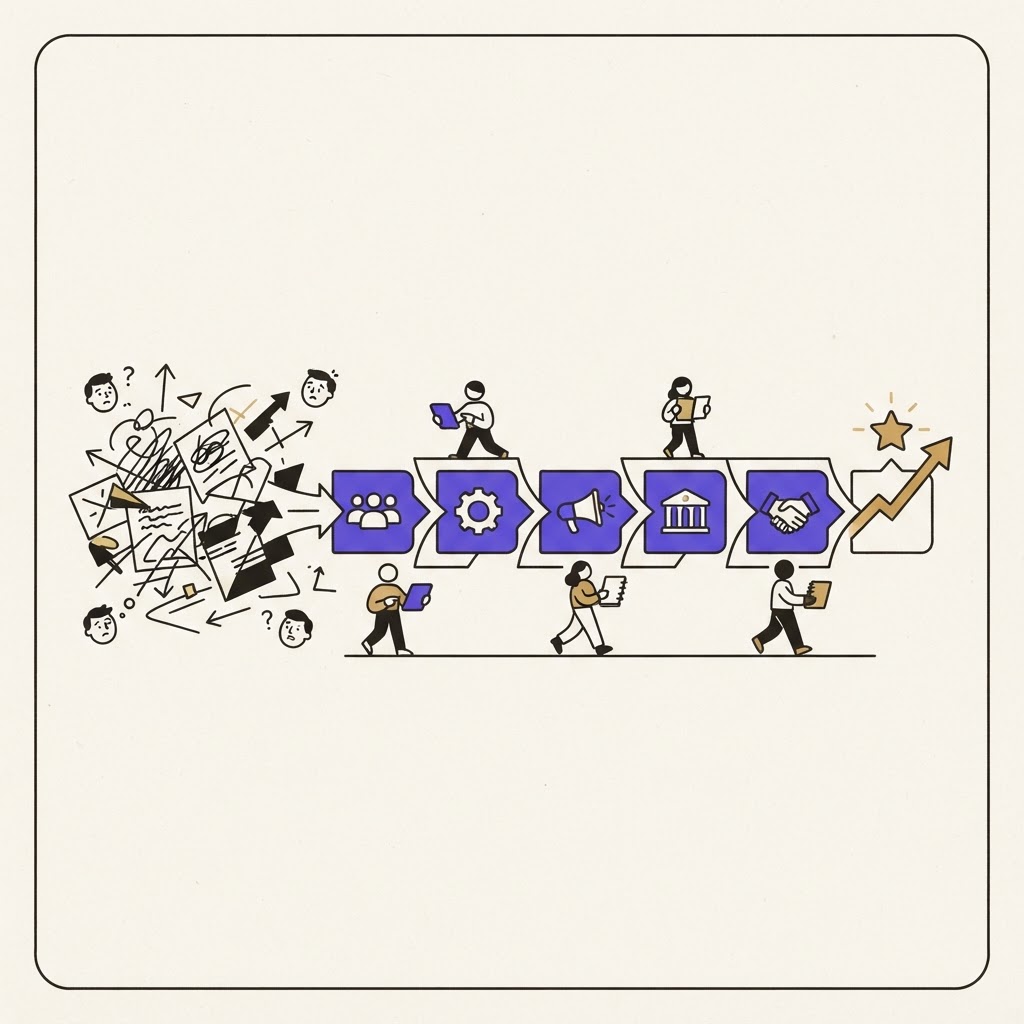
We recently spoke with a leadership team at a 150-member congregation that struggled with this for years. They kept minutes, but they were essentially historical documents—records of what was said, rather than a living roadmap of what needed to be done. Once they shifted their focus from capturing conversation to capturing commitment, the entire dynamic of their volunteer culture changed.

Most churches rely on a designated secretary to take notes. This is a noble task, but it is inherently flawed in a collaborative environment. The secretary is often trying to balance the role of a participant with the role of a transcriber. They miss nuances, they interpret intent differently than the speaker, and by the time the minutes are emailed out on Friday, the "action window" has already closed.
The solution is not to find a faster typist. The solution is to change how you define a "resolved" agenda item. Every major discussion needs to pass the "Three-Point Test" before the meeting moves on to the next topic:
- Who: Is there one specific person assigned to the task?
- What: Is the outcome clearly defined (e.g., "Buy snacks" is not an action; "Purchase 50 juice boxes and 50 snack bags" is)?
- When: Is there a firm deadline that exists prior to the next meeting?
If you cannot answer those three questions, the item has not been discussed—it has merely been mentioned.
A Framework for Accountability
To fix the follow-through problem, you need a system that removes the cognitive load from your volunteers. They shouldn't have to check their email for minutes to know what they are responsible for. Ideally, the responsibility should be handed to them in a way that integrates into their existing life.
The following table illustrates the shift from a "Record-Only" culture to an "Action-Oriented" culture. Note how the focus moves from the what to the who and the deadline.
| Feature | Old Way (Record-Only) | New Way (Action-Oriented) |
|---|---|---|
| Primary Focus | Transcribing every statement | Extracting clear action items |
| Accountability | None/Group reliance | Individual ownership |
| Timing | Minutes sent days later | Action items sent immediately |
| Follow-up | Reviewing old minutes | Starting with current task status |
Pro Tip: Don't wait for a formal "minutes document" to be approved to distribute tasks. The act of receiving an action item within 30 minutes of a meeting significantly increases the probability of completion.
The Impact of Automated Follow-Through
When you implement an automated system, the results are rarely gradual; they are often transformative. In our work at ReadyPen, we have seen that when churches stop relying on manual transcription and start utilizing AI-driven tools to parse meeting content, the "Action Item Completion Rate" skyrockets because the ambiguity is removed.
Task Completion Rates Before vs. After Structured Action Systems
These numbers are illustrative, based on internal usage feedback from ministry teams moving from traditional secretary-led documentation to automated meeting tools. The jump to 92% isn't just about efficiency—it is about psychological safety. Volunteers are more confident when they have a clear, automated paper trail for their assignments.
Pro Tip: Never start a meeting without a "Status Update" segment at the top of the agenda. Reviewing the previous meeting's completed tasks builds a culture of celebration and shared success.
Key Takeaways
| Point | Details |
|---|---|
| Define Clearly | Every item must have a Who, What, and When. |
| Act Immediately | Send tasks within minutes, not days. |
| Reduce Burden | Leverage tools to automate the administrative heavy lifting. |
| Review Regularly | Start meetings by checking previous progress. |
Conclusion
Fixing the follow-through problem isn't about becoming more "corporate" or adding more layers of bureaucracy. It is about honoring the time and effort of the volunteers who make your church run. By moving from a culture of vague conversations to one of clear, recorded, and distributed action, you protect your team from burnout and ensure that the vision cast in your meetings actually takes root in your community.
ReadyPen simplifies this process by automating the capture of action items directly from your discussions, allowing your team to focus on ministry rather than administrative upkeep—you can try ReadyPen free to see the difference for your next leadership gathering.