Church Security Teams: Planning Presence Without Paranoia
You are standing in the lobby on a Sunday morning, watching the steady stream of families, elderly members, and visitors filing into the sanctuary. You see the warm handshakes and hear the hum of authentic fellowship. Yet, in the back of your mind, you are scanning the perimeter. You are counting the exits. You are wondering if the person standing by the children’s wing has been properly vetted. It is a weight that every ministry leader knows—the tension between being a house of prayer and being a fortress.
The goal of church security isn't to turn your lobby into a high-security prison or to make your members feel like they are entering a restricted government facility. True ministry security is about stewardship. It is the practice of creating a peaceful environment where the Gospel can be heard without the distraction of preventable anxieties. The challenge lies in achieving this presence without drifting into suspicion, paranoia, or a culture of fear that drives visitors away.
Defining the Security Philosophy
Before you purchase a single radio or install a new camera, you must establish your church’s philosophy of security. Is your team a group of "guards" or a "safety ministry"? The language you use internally dictates how your volunteers behave on the floor. If they view themselves as guards, their body language will naturally become defensive and rigid. If they view themselves as a safety ministry, they will prioritize hospitality, eye contact, and de-escalation.
Pro Tip: Shift your security team’s training focus from force to observation. A team that masters the art of the 'friendly greeting' acts as a deterrent simply by being attentive and present, rather than looking like they are waiting for a fight.
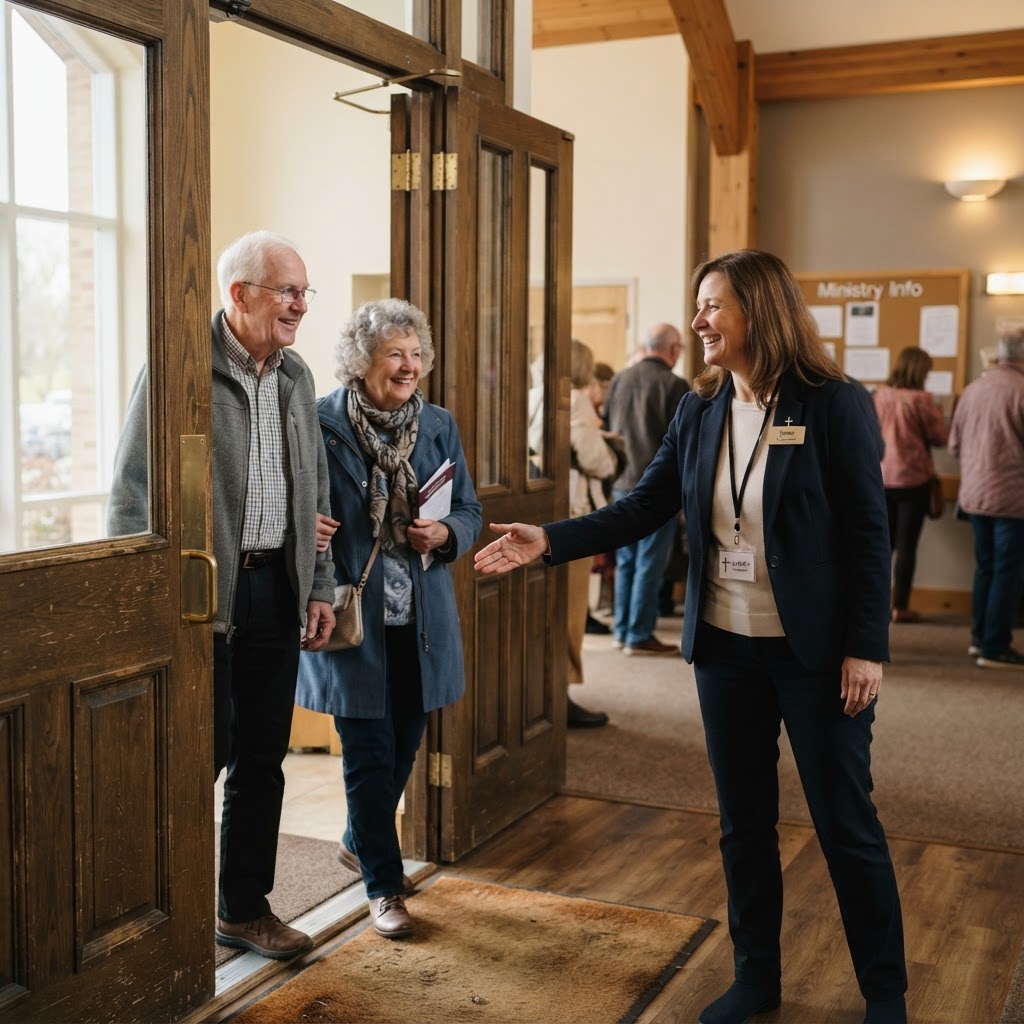
Security should feel like a natural extension of your hospitality team. The best security presence is one that looks exactly like a helpful usher, just with a sharper eye for potential issues. When you integrate your safety team into your greeter training, you ensure that everyone understands the mission is not to inspect, but to protect the peace of the gathering.
The Balance of Visibility
Paranoia happens when security is overt, inconsistent, or purely reactive. If your team only appears when there is a problem, or if they act like they are looking for criminals, you create a culture of anxiety. The key is to make safety measures consistent, discreet, and deeply integrated into the church culture.
Congregant Perception of Safety Initiatives
These illustrative metrics show that congregants generally feel more secure when security is delivered through a lens of care rather than force. It is not about ignoring threats; it is about how those threats are mitigated. For example, keeping doors locked after the service begins is a standard safety protocol, but communicating this via a smiling volunteer is different than having a locked door with a "No Entry" sign plastered on it.
Practical Steps for Your Safety Team
Your team needs clear, documented procedures. One of the biggest mistakes in church safety is relying on "gut feelings" or informal meetings that leave no paper trail. When your safety team meets to discuss incident reports or changes in protocol, you need precise documentation. This is where tools like ReadyPen become invaluable, helping you capture meeting notes and safety action plans during your board or staff meetings so that nothing is left to hearsay or memory.
| Strategy | Focus | Goal |
|---|---|---|
| Hospitality Integration | Greeting & Observation | Peaceful Presence |
| Unified Communication | Radio Protocol | Discreet Coordination |
| Access Control | Flow of People | Controlled Entry/Exit |
| Incident Documentation | Reporting Protocols | Legal & Policy Compliance |
Training for Peace, Not Just Defense
Most security issues in a church setting aren't dramatic crises; they are awkward encounters, domestic disputes, or individuals struggling with mental health. If your security team only trains for tactical combat, they will be ill-equipped to handle the 99% of situations that require empathy and redirection. Train your team in de-escalation, conflict resolution, and the specific policies of your church regarding unwanted guests.
Pro Tip: Conduct regular role-playing exercises during your team meetings. Simulate a parent losing a child, a distressed individual in the lobby, or a power outage. By practicing, you reduce the 'panic factor' when something actually happens.
Documenting Your Security Standards
The final piece of professionalizing your security team is administrative accountability. When a safety incident occurs, your board will need clear records of what was discussed, what was decided, and what was communicated to the volunteers. Avoid the trap of informal security chats that never make it into the official records. By keeping formal minutes and tracking security decisions, you protect the church legally and ensure that your safety culture remains consistent as your volunteer team turns over.
Key Takeaways
| Concept | Details |
|---|---|
| Philosophy | Prioritize safety as ministry, not enforcement. |
| Visibility | Keep your team integrated with greeters. |
| Communication | Use discreet channels for internal coordination. |
| Documentation | Maintain clear records of safety policies. |
Conclusion
Creating a secure environment is an act of love. By planning your security presence with intentionality, you remove the distractions of fear and allow your congregation to focus entirely on worship. A thoughtful, well-trained, and warm safety team is the best way to ensure that your church remains a sanctuary. Because these conversations about safety and policy are vital for your leadership team, you can use try ReadyPen free to automate your meeting documentation and keep your ministry strategies organized and clear.