Building Maintenance Logs: Small Records That Save Big Money
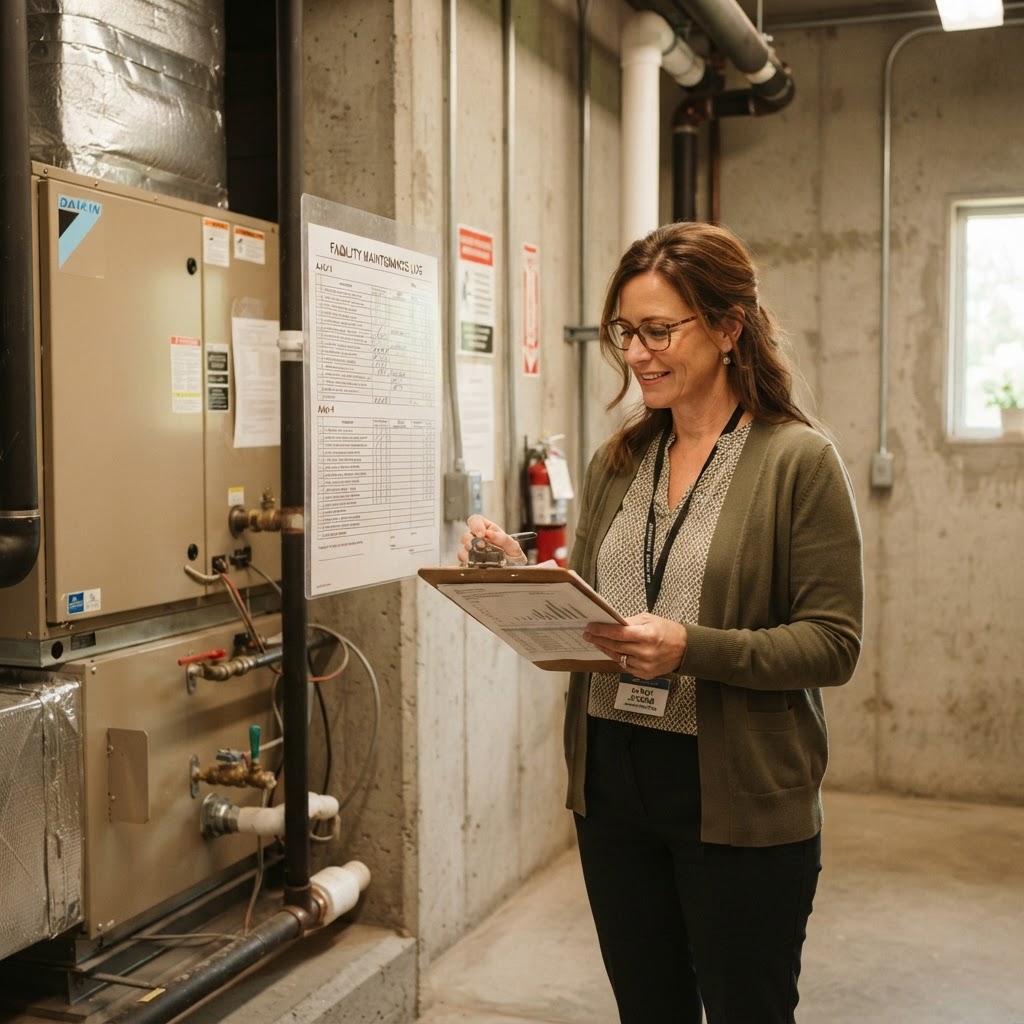
It begins with a subtle, rhythmic hum during the third song of the worship service. By the time the sermon starts, that hum has turned into an insistent rattle, and by coffee hour, the sanctuary is pushing 85 degrees in mid-July. When the HVAC technician finally arrives on Monday morning, the news isn't just about a broken belt; it is about a compressor that burned out because a clogged filter wasn't changed for six months. The repair bill is thousands of dollars, and it arrives just as the church board is finalizing the quarterly budget.
This scenario is a rite of passage for many ministry leaders, but it is entirely preventable. The difference between a healthy facility budget and a crisis-driven one often comes down to a small, dusty notebook or a digital file that nobody looks at until something breaks: the building maintenance log. These records are not just bureaucratic paperwork; they are the strategic blueprints that keep your doors open and your ministry funds focused on the mission rather than constant, emergency infrastructure repairs.
The True Cost of Reactive Maintenance
In the world of facility management, there is a stark divide between proactive maintenance—scheduled inspections and routine upkeep—and reactive maintenance, which is essentially waiting for something to fail before addressing it. Studies in commercial property management consistently show that for every dollar not spent on preventative care, you can expect to pay anywhere from three to five times that amount when the system eventually crashes.
For a church, this isn't just about losing money; it is about losing time and focus. When a furnace dies on a Saturday night, the pastor isn't praying over the sermon notes; they are scrambling to find a space that is warm enough for the congregation. If your facility team isn't logging dates, filter changes, and inspection notes, you are operating in the dark. You are essentially guessing when your equipment is due for a checkup, which is a gamble you will eventually lose.
Cost Comparison: Proactive vs. Reactive (Illustrative)
What Should Actually Be in Your Log?
A maintenance log is only as good as its consistency. It doesn't need to be an overly complex software suite—though digital tracking tools, including those integrated into modern church meeting management like ReadyPen, can help capture action items identified during board discussions. At its core, every entry should answer four simple questions: What was done, who did it, when was it done, and what is the next scheduled interval?
Consider tracking your facility assets in a simple matrix to ensure you don't miss the small things that prevent the big things.
| Asset | Task | Frequency |
|---|---|---|
| HVAC Units | Filter Check/Replace | Monthly |
| Roof/Gutters | Clear debris | Quarterly |
| Fire Extinguishers | Pressure gauge check | Bi-annually |
| Exit Lighting | Battery test | Quarterly |
Pro Tip: Keep a physical copy of your maintenance log inside the electrical room or near the main HVAC unit. Even if you use a digital system, having a paper backup right at the point of service ensures that volunteers can log their tasks immediately without needing a password or internet access.
The Hidden Benefit of Institutional Memory
Pastors come and go, and volunteer board members rotate off every few years. When the person who "knows how the basement sump pump behaves" leaves, that knowledge often leaves with them. A maintenance log serves as the institutional memory for your building. It transforms your facility from a mystery box into a documented asset.
When you have a reliable record, you stop making decisions based on suspicion. You aren't guessing if the roof is ten or fifteen years old; you have the records to prove it. This data is invaluable when you need to sit down with your finance committee to justify capital expenditures. It is much easier to secure funding for a preventative roof coating when you can show the board a five-year history of minor leaks and patch repairs documented in your log.
Creating a Culture of Stewardship
Maintaining a log is a spiritual act of stewardship. If we believe the building is a tool provided by God for the growth of His people, then taking care of it is a way of honoring that resource. When volunteers see a well-maintained facility where small issues are addressed before they become disasters, it sets a standard for the entire church community.
Pro Tip: Assign a "Building Champion"—a volunteer or staff member—whose sole responsibility is to audit the maintenance log once a quarter. This prevents the logs from becoming a place where good intentions go to die; it provides a touchpoint for accountability.
Key Takeaways
| Point | Details |
|---|---|
| Cost Savings | Preventative work is 3-5x cheaper than emergency fixes. |
| Longevity | Regular logs extend the lifecycle of expensive mechanical units. |
| Accountability | Logs provide a permanent history for future ministry leaders. |
| Safety | Documented checks are essential for liability and safety compliance. |
Conclusion
Building maintenance logs are quiet, unassuming tools, but they are among the most powerful assets in a church administrator’s arsenal. By moving from reactive patch-work to a structured, logged maintenance program, you protect your budget, extend the life of your facility, and provide a safer environment for your congregation. When your facility is managed with clarity and foresight, you free up your leadership team to focus on the ministry rather than the mechanics. ReadyPen helps church teams stay organized by automating the documentation of meeting notes and action items, ensuring that the goals you set for your facility actually get the follow-through they deserve. You can try ReadyPen free today to see how easy it is to keep your ministry moving forward.