Board Meetings on the Move: Why Your Church Needs a Walkabout
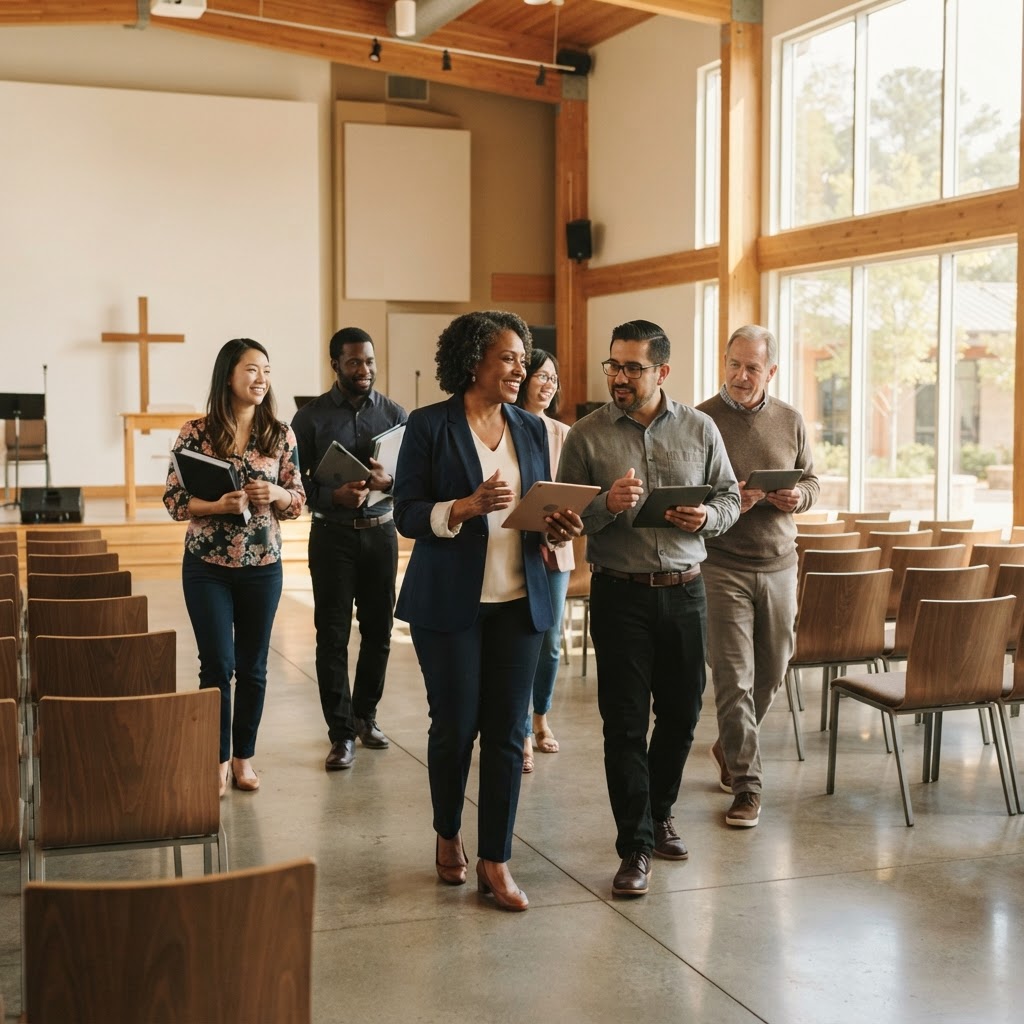
You have been sitting in the same basement conference room for three hours. The fluorescent lights are humming, the coffee in your mug has gone cold, and someone is debating the finer points of the HVAC maintenance contract for the third time this month. You look around the table, and while you see good people, you also see glazed-over expressions. Does this room actually represent the mission of your church, or is it just where you go to get trapped in administrative purgatory?
We often treat church board meetings as purely clerical exercises—a time to review budgets, approve minutes, and debate policies. But when the decision-makers become disconnected from the physical reality of the ministry, the decisions suffer. It is time to stop looking at spreadsheets and start looking at the sanctuary, the nursery, and the parking lot. It is time to leave the room.
The Disconnect Between the Table and the Pews
There is a dangerous phenomenon in church leadership called "boardroom drift." This occurs when a leadership team spends so much time discussing abstract goals, committee reports, and policy updates that they lose their sensory connection to the church facility itself. You might approve a budget for youth ministry repairs, but do you know that the ceiling tiles in the youth room are actually sagging? You might discuss the welcome experience, but have you stood at the front doors during the rush between services lately?
A walkabout meeting changes the dynamic entirely. It forces leadership to inhabit the spaces they are responsible for. It moves the conversation from the theoretical to the visceral. When you stand in the very room where your congregants worship, your perspective on renovation costs, safety concerns, or layout efficiency shifts. The "data" on your report becomes a real-life situation that demands prayerful, grounded attention.
Creating a 'Walkabout' Agenda
Moving your meeting does not mean abandoning structure. In fact, a site visit requires more intentionality than a standard meeting to ensure you don't just wander around aimlessly. You need to marry your agenda items to specific locations on your church campus.
| Agenda Item | Location for Discussion |
|---|---|
| Facility Upgrades | The physical space in question |
| Security/Flow | Nursery and entryways |
| Budget/Maintenance | Utility closets/storage |
| Vision Casting | The sanctuary stage/altar |
Pro Tip: When moving to a new location, start by asking a single open-ended question: "If a first-time guest walked into this room right now, what is the first thing they would feel, smell, or notice?" The answers often reveal more than a three-page facility report.
Using Data to Drive Physical Engagement
While walking through your facility, you might notice that engagement levels vary by space. We have found that boards who incorporate movement report higher satisfaction and better recollection of decisions. Below is an illustrative breakdown of how leaders perceive the effectiveness of "Active" meetings versus traditional "Stationary" ones.
Perceived Meeting Impact: Movement vs. Stillness
When you are walking, you aren't just listening to a report; you are actively engaging with the mission. Of course, keeping track of these mobile conversations can be difficult if you are walking around with a clipboard and a pen. Tools like ReadyPen help by automatically capturing those off-the-cuff insights during your walkabouts, ensuring that the observations made in the hall don't get lost before the next meeting.
Overcoming the 'Efficiency' Trap
One common objection to the walkabout is that it is "less efficient." Some board members argue that staying seated is faster. But speed isn't the primary goal of ministry governance; accuracy and alignment are. A quick meeting that results in a misguided repair project is not efficient—it is expensive. By taking the time to see the work, you validate the needs of your staff and ensure your stewardship of church resources is based on reality, not just spreadsheets.
Pro Tip: Designate a "Scribe" for the walkabout. Even if the meeting is fluid, someone must be responsible for documenting the specific action items that arise during the walk, or those ideas will vanish as soon as you head back to the parking lot.
Avoiding Common Pitfalls
A mobile meeting is not a vacation. If you spend your time complaining about the coffee or the lawn care, you have missed the point. Keep the focus on how the physical space serves the spiritual mission. If you walk into the children's wing, keep the conversation centered on safety, accessibility, and the gospel-centered environment, not just whether the carpet is the right color.
Key Takeaways
If you are ready to shake up your next meeting, keep this summary in mind as your roadmap.
| Point | Details |
|---|---|
| Intentionality | Match agenda items to physical spaces on-site. |
| Perspective | Look through the eyes of a first-time visitor. |
| Documentation | Assign a scribe to track mobile discussions. |
| Purpose | Connect governance to the lived ministry experience. |
Conclusion: Meeting Your Mission Where It Happens
Church leadership is too important to be confined to a conference table. When you leave the room, you aren't just walking the halls—you are walking the mission field. You are grounding your governance in the reality of your facilities and the people who use them every week. By choosing to move, you invite a new level of clarity and care into your oversight.
Of course, the best insights are useless if they aren't remembered; if you need help keeping your board's mobile decisions organized, you can try ReadyPen free to automate your meeting documentation.